
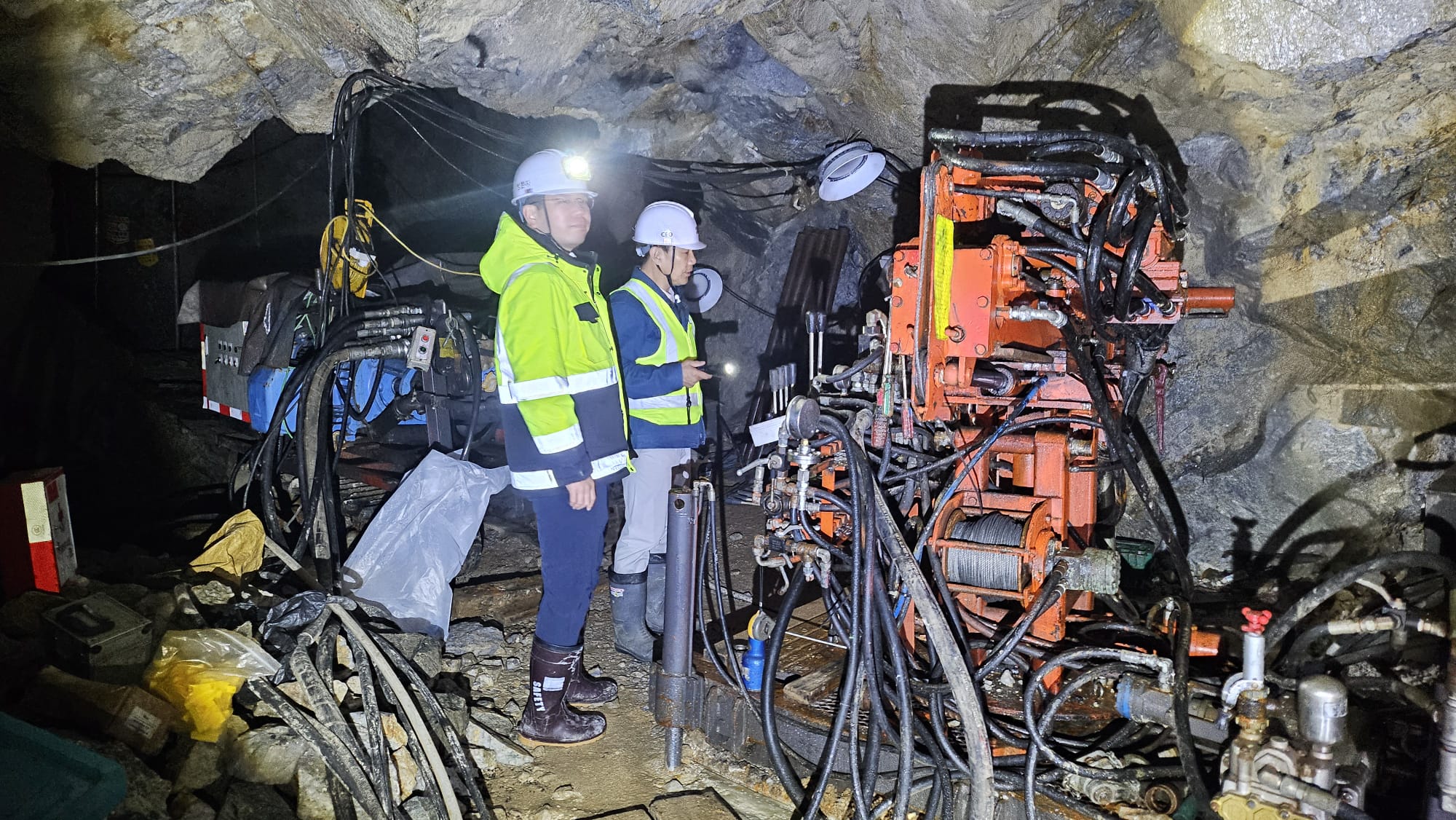
How to invest in tungsten: the short answer
You can invest in tungsten in five ways: buy physical tungsten, buy shares in producing tungsten miners, buy shares in development-stage tungsten companies, buy a broad strategic-metals ETF, or invest in a private, pre-IPO tungsten company. Most investors use company shares, because there is no exchange-traded spot market for tungsten and no pure-play tungsten ETF.
The right route depends on how much risk, liquidity and direct exposure you want. The rest of this guide compares each option, explains what drives the tungsten market, and gives a checklist for judging a tungsten company before you invest.
Why investors are looking at tungsten
Tungsten has the highest melting point of any metal, at 3,422°C. It is used in cutting tools, armour-piercing munitions, aerospace alloys and semiconductors (see what tungsten is used for). Investors have taken notice for three reasons.
Supply is concentrated in China. The USGS estimates that world mine production was about 85,000 tonnes in 2025, and China produced about 67,000 tonnes of it, around 79%. China also holds the largest reserves, at roughly 2.5 million tonnes. See our breakdown of where tungsten is mined for the full country table.
China restricts exports. In February 2025 China added ammonium paratungstate (APT), tungsten oxides and other tungsten products to its dual-use export controls. For 2026 and 2027, only 15 approved companies may export tungsten products. We cover the timeline in China's tungsten export controls explained.
Western defence rules now require non-Chinese supply. From 1 January 2027, DFARS clause 252.225-7052 bars US defence contractors from delivering tungsten metal powder, tungsten heavy alloy or components containing them if the tungsten was mined in China, Russia, North Korea or Iran. Recycled material counts by its original origin. Defence buyers therefore need tungsten that can be traced to a mine in an allied country.
The result is a two-price market. In late October 2026, European APT was quoted at about US$2,500–3,100 per metric ton unit (mtu), while Chinese domestic APT traded at roughly US$800–850 per mtu. Our tungsten price guide explains these units and the 2025–2026 price history.
Five ways to invest in tungsten compared
| Route | How it works | Liquidity | Main risk |
|---|---|---|---|
| Physical tungsten | Buy bars or coins from a dealer | Low | Wide spreads, no benchmark price for retail |
| Producing miners | Buy listed shares in companies already selling concentrate | High | Commodity price swings, operating risk |
| Developers and restarts | Buy listed shares in companies building or restarting mines | Medium | Financing, permitting and construction delays |
| Strategic-metals ETFs | Buy a fund holding many critical-minerals companies | High | Little actual tungsten exposure |
| Pre-IPO placements | Buy private shares before a company lists | Low until listing | Listing may be delayed, shares illiquid, high risk |
1. Physical tungsten
Specialist dealers sell tungsten bars, coins and cubes. It is the most direct form of ownership, but it is a poor investment vehicle. Industrial tungsten trades as concentrate, APT or powder under negotiated contracts, not on an exchange, so retail investors have no transparent price to buy or sell against. Dealer premiums are high and buyback markets are thin.
Physical tungsten makes sense as a collectible. It does not track the industrial prices quoted in market reports.
2. Shares in producing tungsten miners
Producers sell tungsten concentrate, so their revenue tracks the tungsten price. Outside China, there are only a few producers. Almonty Industries operates the Panasqueira mine in Portugal and has brought its Sangdong mine in South Korea into production. Masan High-Tech Materials operates the Nui Phao mine in Vietnam. China's large producers, such as Xiamen Tungsten and China Tungsten & Hightech, are listed on mainland Chinese exchanges, which many foreign investors cannot easily access.
Producers are the most liquid way to own tungsten exposure, but their share prices also reflect costs, debt, currencies and management execution. Our list of tungsten stocks groups listed companies by stage and jurisdiction.
3. Development-stage and restart companies
Developers are companies building new mines or restarting old ones. Examples include Tungsten West (Hemerdon, UK), EQ Resources (Mt Carbine, Australia), Guardian Metal Resources (Pilot Mountain, Nevada) and American Tungsten (IMA mine, Idaho). If a project reaches production, the share price can rerate sharply. If financing, permitting or metallurgy goes wrong, investors can lose most of their money.
Restarts of past-producing mines usually carry less geological risk than new discoveries. The ore body is already known, and infrastructure may already exist.
4. ETFs and funds
There is no pure-play tungsten ETF. Broad funds such as the VanEck Rare Earth and Strategic Metals ETF (REMX) hold a basket of critical-minerals companies, and tungsten is only a small part of the portfolio. These funds suit investors who want diversified critical-minerals exposure, not a targeted tungsten position. We review the options in our tungsten ETF guide.
5. Pre-IPO and private placements
Some tungsten companies raise money privately before they list on a stock exchange. Pre-IPO investors buy shares at a fixed price ahead of the listing, hoping that production milestones and the listing itself will raise the valuation. In exchange, they accept that the shares cannot be sold until a listing happens, which may be delayed or may never happen.
Pure Tungsten Inc. is an example. It is a private Canadian company restarting the Ssangjon tungsten mine and its fully built mill in South Korea, with production targeted for Q4 2026. It is also developing the past-producing Maykhura mine in Tajikistan (about 2 million tonnes at 0.93% WO₃) in a joint venture with TALCO. The company is raising C$10 million at C$0.80 per share, with a C$5,000 minimum, ahead of a planned IPO or reverse takeover in London or New York in H2 2027. Read the Pure Tungsten pre-IPO investment overview for full details, or see how pre-IPO mining investments work.
Is tungsten a good investment? The bull and bear case
The bull case
- Supply is concentrated, and China, the dominant producer, actively restricts exports.
- The 2027 DFARS rule creates a defence market that only non-Chinese, non-Russian mine supply can serve.
- Demand comes from industries that are hard to substitute away from: cemented carbide tooling, defence and semiconductors. The USGS notes that most substitutes reduce rather than replace tungsten use.
- The United States has not mined tungsten commercially since 2015, so allied supply from countries such as South Korea, Australia, Portugal and Spain is strategically valuable.
The bear case
- Prices are volatile. Chinese APT fell roughly 69% from its mid-March 2026 peak by mid-October, according to Shanghai Metals Market, as carbide makers cut purchases.
- China can change export policy at any time, in either direction.
- The market is small, at around 85,000 tonnes of mine supply a year, so tungsten equities are often thinly traded.
- Mine projects routinely run late and over budget, and junior companies often issue new shares to fund them, diluting existing holders.
Tungsten works best as a small, high-conviction part of a diversified portfolio. It should not be a core holding.
How to evaluate a tungsten company before investing
Use this checklist for any tungsten stock or private placement:
- Jurisdiction. Is the mine outside the DFARS covered countries, in a stable, mining-friendly country with clear permitting?
- Grade. Tungsten grade is quoted as percent WO₃ (tungsten trioxide). Higher grade generally means lower cost per tonne of product. Our guide to WO₃ explains the numbers.
- Infrastructure. Does the company already own a processing plant (mill), or does it need to build one? A built mill removes a large capital and timing risk.
- Resource reporting. Is the resource reported under a recognised code such as JORC or NI 43-101? See JORC vs NI 43-101.
- Offtake and customers. Has the company signed sales agreements, or does it have interest from end users in defence, carbide or semiconductors?
- Funding path. How much money is needed to reach production, and where will it come from?
- Timeline and track record. Are the production and listing dates realistic, and has management delivered projects before?
Getting started: a step-by-step approach
- Decide what exposure you want: price exposure (producers), growth exposure (developers), diversification (ETFs) or early-stage upside (pre-IPO).
- Check eligibility. Listed shares need a brokerage account with access to the relevant exchange (TSX, ASX, AIM, Nasdaq). Private placements are often limited to sophisticated, high-net-worth or accredited investors, depending on your country.
- Do your due diligence with the checklist above and read the company's disclosures and resource reports.
- Size the position so that a large loss would not damage your overall finances.
- Track the market: follow APT prices, Chinese export policy and project milestones. Our tungsten insights hub covers each of these.
If you are looking at non-Chinese tungsten supply from a mine that is restarting rather than starting from scratch, request the Pure Tungsten investor pack to review the Ssangjon and Maykhura projects in detail.