
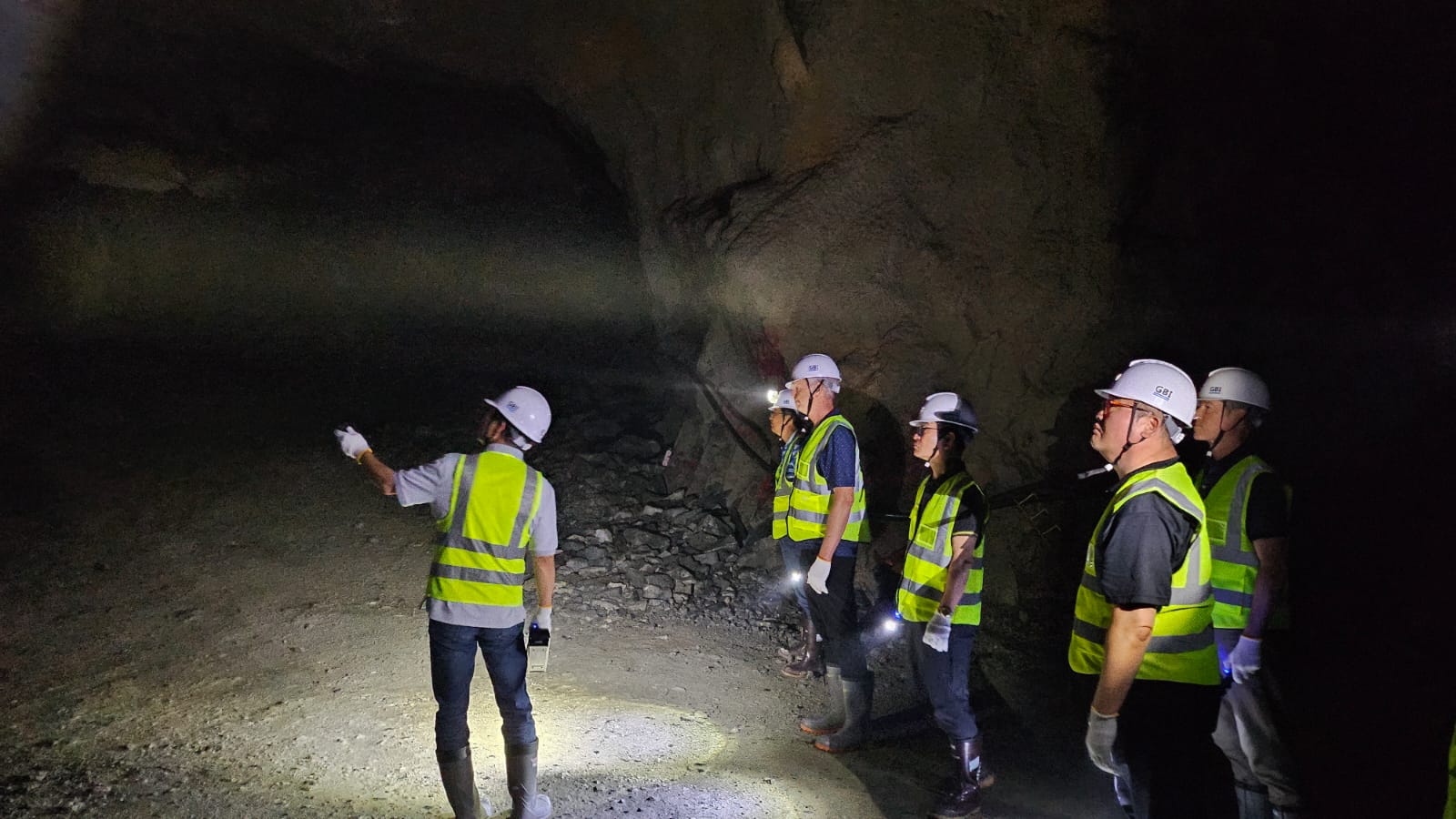
Is there a tungsten shortage?
Yes, outside China. Western buyers face the tightest tungsten supply in decades because China, which mined about 79% of the world's tungsten in 2025, has restricted exports since February 2025, while defence demand is rising and few mines operate elsewhere. S&P Global estimates that mines outside China covered only about 37% of demand in 2025.
Inside China the picture is different. Chinese domestic prices peaked in March 2026 and then fell sharply, while Western prices stayed near records. Tungsten has become a two-price market: there is enough tungsten in the world, but not enough that Western buyers can freely buy.
Why is there a tungsten shortage? Five causes
1. China's export controls
Since 4 February 2025, exports of APT, tungsten oxides, tungsten carbide and heavy tungsten alloys have needed a dual-use export licence from China's Ministry of Commerce, and only 15 approved companies may export. China's APT exports fell from 782 tonnes in 2024 to 243 tonnes in January–November 2025, according to Fastmarkets. Our guide to China's tungsten export controls has the full timeline.
2. Lower Chinese mining quotas
China cut its 2025 first-batch tungsten mining quota by 6.5%, to 58,000 tonnes of concentrate. Less ore is mined, and more of it is kept for Chinese manufacturers.
3. Rising defence demand
Tungsten is used in armour-piercing rounds, missile and bomb components, armour and aircraft parts. Defence used about 8% of the world's tungsten in 2021. Market estimates cited by the Centre for Mineral Resources put it at about 12% by mid-2026, heading to around 15% in 2027–2028. The Conversation reports a 12% increase in military tungsten use in 2026 alone.
The wars in Ukraine and Iran matter because, as Reuters notes, tungsten in munitions is consumed on detonation. Unlike a carbide drill bit, it cannot be recycled.
4. Few mines and refineries outside China
The US has had no commercial tungsten mine production since 2015, according to the USGS. China also produces about 85% of the world's APT, the intermediate most tungsten products are made from (S&P Global). Even concentrate mined elsewhere often has to go to China for refining.
5. Growing civilian demand
Demand is not only military. Tungsten wire used to cut solar-panel wafers needed an estimated 4,500 tonnes in 2025, almost triple the year before, according to the China Tungsten Industry Association. Semiconductor makers use tungsten films, and Japanese producers of tungsten hexafluoride, which supply about a quarter of the world market, warned customers of output cuts in the second half of 2026.
How big is the tungsten supply gap?
S&P Global's August 2026 tungsten report models supply from mines outside China against demand for APT outside China:
| Year | Mine supply outside China | Supply gap (outside China) | Assumption |
|---|---|---|---|
| 2025 | Covered ~37% of demand | — | Actual |
| 2026 | ~22,000 t WO₃ | ~21,000 t WO₃ | Four announced projects delivered |
| 2028 | +~13,000 t WO₃ from seven projects | ~12,000 t WO₃ | All announced projects on time |
| 2030 | No further new mines | ~16,000 t WO₃ | Demand grows ~10% from 2026 to 2030 |
S&P stresses that these are unrisked projections. Mining projects often slip because of financing, permitting and construction delays. Meeting the announced pipeline would require mine capacity outside China to more than double within two years.
What the shortage looks like for buyers
A US Commerce Department advisory committee (ETTAC) reported in June 2026 that:
- APT prices rose from about US$300 per metric tonne unit (mtu) of WO₃ in mid-2024 to about US$3,000/mtu in mid-2026, an increase of around 900%
- Lead times stretched from 4–6 weeks to 12–20 weeks, and some suppliers stopped taking new orders
- US makers of emissions catalysts faced material shortages
In Europe, the head of France's public investment bank Bpifrance said in April 2026 that manufacturers had been running their cutting tools for longer to avoid buying new ones, according to AFP. CME Group said in October 2026 that it plans to launch a tungsten futures contract by early 2027 to improve price transparency.
How much is tungsten worth now? A worked example
Tungsten is priced per metric tonne unit (mtu): 10 kg of tungsten trioxide (WO₃), which contains about 7.93 kg of tungsten metal.
| European APT price (per mtu) | Contained tungsten per kg | Contained tungsten per lb |
|---|---|---|
| US$2,500 | ~US$315 | ~US$143 |
| US$2,800 | ~US$353 | ~US$160 |
| US$3,100 | ~US$391 | ~US$177 |
Our calculation from European APT quotes of US$2,500–3,100/mtu in late October 2026 (Shanghai Metals Market). Finished tungsten products cost more. For current prices, see the tungsten price guide.
Is the tungsten shortage real? The counterargument
Some mining analysts argue the problem is not geology. Writing in Streetwise Reports in October 2026, mining commentator Bob Moriarty argued that the world is not short of tungsten in the ground. In his view, it is short of mines that can deliver it. Large deposits exist in Canada, Australia, Kazakhstan, the US and Europe, but building a tungsten mine and mill takes years and a lot of capital.
There is also a risk in the other direction. The Centre for Mineral Resources points out that between 2014 and 2018, low-priced Chinese supply drove Western tungsten projects into bankruptcy. China's control of supply can restrict the market today and flood it later. Investors should treat today's high prices as a policy-driven condition that could change, not a permanent one.
Can recycling close the gap?
Only partly. Tungsten has an end-of-life recycling rate of about 42%. Around 30–35% of global supply comes from scrap, rising to about 70% in Western markets, according to The Conversation. S&P Global estimates secondary recovery supplies about 35% of global demand. Recycling cannot replace tungsten destroyed in munitions, and competition for scrap is increasing.
What would end the tungsten shortage?
- New mines outside China, such as Sangdong in South Korea (commercial production since September 2026), Hemerdon in the UK (ramping up), El Moto in Spain (targeted 2029) and Pilot Mountain in Nevada (targeted late 2028). See our tungsten stocks list.
- Restarts of existing mines, which can produce sooner than new builds because the infrastructure is already there.
- New refining capacity outside China, so concentrate can be turned into APT and powders without passing through China.
- US defence sourcing rules from 1 January 2027 that create guaranteed demand for non-Chinese tungsten (see the DFARS rule).
How Pure Tungsten fits in
Pure Tungsten Inc. is a restart story. Its Ssangjon mine in South Korea has a fully built mill, and production is targeted for Q4 2026 at 1,000 tonnes a year. Its Maykhura project in Tajikistan, a joint venture with TALCO, has about 2 million tonnes at 0.93% WO₃ plus about 900,000 tonnes of tailings at about 0.4% WO₃. The company targets 4,000 tonnes a year by 2028 and plans to list in London or New York in H2 2027.
Restarts carry their own risks, including ramp-up, metallurgy and financing. To review the projects in detail, request the Pure Tungsten investor pack.