
What is the DFARS tungsten rule?
From 1 January 2027, US defence contractors cannot deliver tungsten metal powder, tungsten heavy alloy, or parts made with tungsten heavy alloy if the tungsten was mined, refined, separated, melted or produced in China, Russia, North Korea or Iran. The rule is DFARS clause 252.225-7052, part of the Defense Federal Acquisition Regulation Supplement that governs Pentagon purchasing.
The rule already bans tungsten melted or produced in those countries. The 2027 change extends it back to the mine, including the ore or feedstock behind recycled material. A part made in the US from Chinese-mined tungsten will no longer qualify.
This explainer summarises the regulation for investors and general readers. It is not legal advice; contractors should rely on their contract terms and counsel.
What changes on 1 January 2027
| Through 31 December 2026 | From 1 January 2027 | |
|---|---|---|
| What is restricted | Covered material melted or produced in a covered country | Covered material mined, refined, separated, melted or produced in a covered country |
| Tungsten production steps covered | Atomisation, calcination and reduction into powder, consolidation of powders, and all later steps | The entire chain, from mining or producing tungsten ore or feedstock, including recycled material, through to powder, heavy alloy and components |
| Commercial off-the-shelf (COTS) exception | Applies unless the item is 50% or more tungsten by weight | Applies unless the item is 50% or more covered material by weight |
| Mill products (bar, billet, wire, plate, sheet, etc.) | Excepted for tungsten heavy alloy mill products not built into an end item | Excepted for covered-material mill products not built into an end item |
Source: 48 CFR 252.225-7052 (May 2024 version), eCFR.
What does DFARS 252.225-7052 cover?
The clause applies to five covered materials:
- Samarium-cobalt magnets
- Neodymium-iron-boron magnets
- Tantalum metals and alloys
- Tungsten metal powder
- Tungsten heavy alloy, or any finished or semi-finished component containing tungsten heavy alloy
Tungsten heavy alloy is defined as a tungsten-based alloy that meets ASTM B777 or SAE-AMS-T-21014 specifications, or that contains at least 90% tungsten in a matrix of other metals, such as nickel-iron or nickel-copper, with a density of at least 16.5 g/cm³. These alloys are used in armour-piercing penetrators, fragmentation warheads, counterweights, ballast and radiation shielding.
Covered countries are North Korea, China, Russia and Iran.
The clause also bars delivery of any end item manufactured in a covered country that contains a covered material.
Does it cover tungsten carbide?
Tungsten carbide is not named as a covered material. The clause names tungsten metal powder and tungsten heavy alloy. Carbide is made from tungsten powder, though, and many defence contractors are tracing tungsten origin across all their parts to be safe. How the clause applies to a particular part depends on the contract, so contractors should take legal advice.
Exceptions to the DFARS tungsten rule
The restriction does not apply to:
- Commercial off-the-shelf (COTS) items, unless they are 50% or more covered material by weight (from 2027)
- Mill products such as bar, billet, slab, wire, cube, sphere, block, blank, plate or sheet that have not yet been built into an end item, subsystem, assembly or component
- Electronic devices, unless the contract says otherwise
- Cases where an authorised official has made a non-availability determination, meaning compliant material of satisfactory quality and quantity cannot be obtained when needed at a reasonable price
The prime contractor must flow the clause down to subcontracts at every tier for items that contain a covered material, including subcontracts for commercial products, unless an exception applies.
Where does the rule come from?
The mine-to-product requirement comes from section 854 of the National Defense Authorization Act for Fiscal Year 2024 (Public Law 118-31), codified at 10 U.S.C. 4872. The DFARS clause was first published in 2019 and has been amended several times since; the current version is dated May 2024.
Why the 2027 deadline matters for tungsten supply
The four covered countries mined about 71,000 of the world's 85,000 tonnes of tungsten in 2025, according to the USGS: China 67,000, Russia 2,000 and North Korea 2,000, with no significant output reported for Iran. China also produces about 85% of the world's APT (ammonium paratungstate), the intermediate from which tungsten powder is made, according to S&P Global.
To comply, defence supply chains need tungsten that is:
- Mined outside the covered countries, in places such as South Korea, Australia, Rwanda, Vietnam, Bolivia, Spain, Portugal, Austria, the UK or Canada
- Refined outside the covered countries. Ore mined in an allied country but refined in China would not comply.
- Traceable, with documents that prove origin at each step, including for recycled scrap
That is a narrow channel. S&P Global estimates that mines outside China covered only about 37% of demand in 2025. China's own export controls have also restricted Chinese supply since February 2025. Together, the two policies are a key reason for the tungsten shortage and the price premium for tungsten outside China (see our tungsten price guide).
How defence contractors are preparing
Compliance specialists report that manufacturers are:
- Mapping supply chains to the mine of origin for every part that contains tungsten powder or heavy alloy
- Requesting supplier declarations and certificates of origin, including for recycled content
- Qualifying new suppliers outside the covered countries, which can take a year or more
- Signing long-term offtake agreements with non-Chinese producers. Almonty's Sangdong mine in South Korea, for example, has more than 90% of Phase I output contracted to Global Tungsten & Powders, a US-based powder maker owned by Austria's Plansee Group.
What the DFARS rule means for investors
- Origin is now part of tungsten's value. Compliant tungsten from an allied country may command a premium over tungsten from covered countries.
- Refining outside China is the bottleneck. New mines alone do not solve the problem without non-Chinese APT and powder capacity.
- Policy risk remains. Non-availability determinations, rule changes or a change in China's export policy could reduce the premium. Treat the rule as a strong demand driver, not a guarantee.
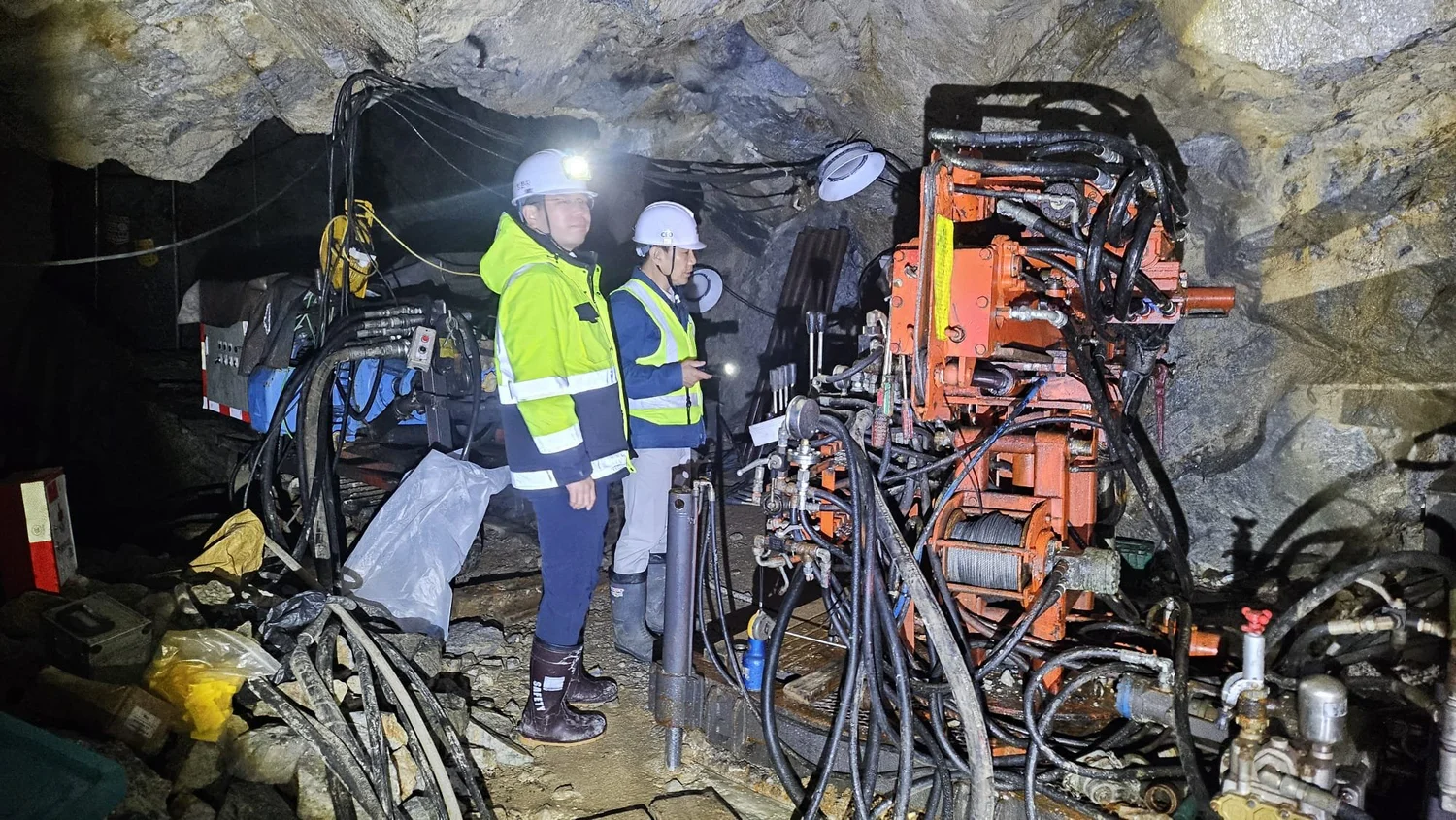
Pure Tungsten Inc. is restarting the Ssangjon mine in South Korea, a US treaty ally outside the DFARS covered countries, with a fully built mill and production targeted for Q4 2026. Its Maykhura project in Tajikistan, also outside the covered countries, is a joint venture with TALCO. Learn more on the Pure Tungsten pre-IPO investment overview, compare listed alternatives in our tungsten stocks list, or request the investor pack.