
Is tungsten a good investment?
Tungsten can be a good investment for investors who accept high risk, because supply is concentrated in China, exports are restricted, and US defence rules from 2027 create demand for non-Chinese supply. But tungsten prices are volatile, the market is small, and prices outside China are far above the long-run cost of new supply, so it belongs in a small, diversified position, not at the core of a portfolio.
Most "is tungsten a good investment" answers stop at the supply story. This guide also covers the numbers that cut the other way. It compares today's price with the cost of new supply, explains why tungsten shares fell in 2026 while the metal stayed expensive, and sets out who tungsten suits and who it doesn't.
For the practical side, including brokers, ETFs and private placements, see our guide on how to invest in tungsten.
Tungsten investment scorecard (November 2026)
| Factor | What supports investing | What argues for caution |
|---|---|---|
| Supply concentration | China mined ~79% of world supply in 2025 (USGS) | China can relax controls as easily as tighten them |
| Policy | China's export licensing since Feb 2025; US DFARS rule from 1 Jan 2027 | Policy-driven prices can reverse quickly |
| Price level | European APT at ~US$2,500–3,100 per mtu | Roughly 7x S&P Global's estimated long-run cost of supply |
| Volatility | Large moves create opportunities for producers | Chinese APT fell ~69% from its March 2026 peak by mid-October |
| Demand | ~162 kt WO₃ in 2025, growing ~2% a year (S&P Global) | Two-thirds is carbide tooling, which tracks manufacturing cycles |
| New supply | Non-Chinese projects can earn premium prices | 11 projects could add ~20 kt WO₃ by 2030, if delivered |
| Ways to invest | Listed miners, developers, broad ETFs, pre-IPO | No tungsten ETF, no exchange, few liquid stocks |
APT is ammonium paratungstate, the benchmark refined tungsten product. An mtu (metric ton unit) is 10 kg of tungsten trioxide (WO₃). DFARS is the US Defense Federal Acquisition Regulation Supplement.
The bull case for tungsten
Supply is concentrated and controlled
China mined about 67,000 of the world's 85,000 tonnes of tungsten in 2025, according to the USGS. It also refines about 85% of the world's APT, according to S&P Global. Since February 2025, Chinese tungsten exports have needed a licence, and in December 2025 China's Ministry of Commerce named just 15 companies allowed to export tungsten in 2026 and 2027. See our guide to China's tungsten export controls.
A protected defence market starts in 2027
From 1 January 2027, US defence contractors cannot deliver tungsten metal powder, tungsten heavy alloy, or parts made with it, if the tungsten was mined, refined or produced in China, Russia, North Korea or Iran. Only tungsten mined and processed elsewhere can serve that market, whatever the Chinese price. Read the DFARS tungsten rule explained.
Supply outside China is short
S&P Global estimates that "resilient" mine supply, which excludes China, Russia, North Korea and Chinese-owned assets, was about 22 kt WO₃ in 2026. That is about 21 kt short of demand outside China. If every announced project is delivered on time, the gap narrows to about 12 kt in 2028, then widens again to about 16 kt by 2030 as demand grows. Recycling fills part of the gap, supplying about 35% of global demand.
Demand is hard to substitute
Cemented carbides for cutting, drilling and wear parts take about 64% of tungsten demand, according to S&P Global. Defence, aerospace and semiconductors use less but are strategically important. S&P Global says substitution is difficult in carbides and high-performance uses, and more feasible in some mill products, steels and alloys. See what tungsten is used for.
The bear case: what could go wrong
- Prices are volatile. Chinese APT rose from RMB 670,000 per tonne in January 2026 to RMB 1.5 million in March, then fell to about RMB 470,000 by mid-October, according to Yatech Materials and Shanghai Metals Market.
- High prices attract supply. Today's ex-China price is far above what new mines need to be viable (see the next section). That draws in new projects and recycling, which can eventually bring prices down.
- Policy can reverse. The bull case depends heavily on Chinese and US policy. More Chinese export licences, a trade deal or a delay to US rules would weaken it.
- Execution risk. S&P Global notes that much of the new non-Chinese supply "is exposed to execution risk", making commissioning dates uncertain. Mines often start late and over budget.
- The market is small and opaque. There is no futures exchange for tungsten. Most metal is sold under private contracts, and spot trading in Europe has been close to zero for months, according to Shanghai Metals Market.
- Dilution. Junior miners fund construction by issuing shares, which reduces each existing shareholder's stake.
Today's tungsten price vs the cost of new supply
This is the number most tungsten investment articles leave out. S&P Global's October 2026 report estimates that a structural cost of US$36–40 per kg of WO₃ in 2028 would sustain the non-Chinese supply chain and support most announced projects. Before export controls, the price was about US$33 per kg.
Converting those figures to the US$ per mtu that tungsten prices are quoted in (1 mtu = 10 kg of WO₃):
| Benchmark | US$ per kg WO₃ | US$ per mtu | Multiple of structural cost (mid-point US$380/mtu) |
|---|---|---|---|
| Pre-export-control price (S&P Global) | ~33 | ~330 | 0.9x |
| S&P Global 2028 structural cost | 36–40 | 360–400 | 1.0x |
| Chinese domestic APT, 12 Nov 2026 (~RMB 550,000/t) | ~82 | ~825 | ~2.2x |
| European APT reference, Nov 2026 | ~268 | ~2,675 | ~7.0x |
Sources: S&P Global Tungsten Market Report (Oct 2026); Yatech Materials; Shanghai Metals Market. S&P's structural cost is a long-run cost benchmark, not a price forecast.
What this means for investors:
- Margins are currently large. A non-Chinese producer selling at European prices earns far more than it needs to cover costs and capital.
- Those margins are policy-driven. The premium exists because Chinese material cannot move freely. If that changes, the gap could close.
- Test any project at lower prices. A sensible check is whether a mine still works at prices well below today's spot, closer to the structural cost range. Projects that only work at current prices carry the most risk.
See today's figures in our tungsten price guide.
Why tungsten stocks fell while tungsten prices stayed high
In 2026, owning tungsten shares and owning the tungsten price were very different experiences. The VanEck Rare Earth and Strategic Metals ETF (REMX), the most widely held critical-minerals fund, fell 31.37% in the year to 31 October 2026, according to VanEck. Over the same period, European APT was still quoted at US$2,500–3,100 per mtu, close to record levels.
Three things explain the gap:
- Basket trading. Investors often trade tungsten, rare earths and antimony as one "critical minerals" theme. When US–China tensions eased, they sold the whole group. Tungsten is a small part of REMX: Xiamen Tungsten made up 4.40% of the fund at the end of October.
- Shares price the future, not today's spot. A developer's value depends on financing, construction and the price expected when it starts production, often years away.
- Funding risk. When share prices fall, raising money costs more and dilution increases, which can push prices down further.
The lesson: a high tungsten price does not guarantee rising tungsten shares, especially for companies that are not yet producing. Compare the companies in our list of tungsten stocks by stage and funding, not by the headline price.
Is physical tungsten a good investment?
Generally, no. You can buy tungsten bars, coins and cubes from specialist dealers, but:
- There is no exchange and no retail benchmark price, so you can't easily check what your metal is worth.
- Dealer premiums are high and buyback markets are thin, so selling can mean a large discount.
- The metal itself is cheap per gram: about US$0.10–0.34 per gram of contained tungsten, depending on whether you use Chinese or European prices. Gold is worth well over a hundred times more.
Tungsten's value as an investment comes from the companies that mine and refine it, not from holding the metal. The same applies to tungsten jewellery, which is usually tungsten carbide and has little resale value.
Are tungsten stocks a good investment? Comparing the options
| Route | What you are betting on | Main risk | Best suited to |
|---|---|---|---|
| Producing miners | Current prices and production volumes | Price falls, operating problems | Investors wanting direct price exposure |
| Developers and restarts | Projects reaching production | Financing, permitting and delays | Investors comfortable with project risk |
| Broad critical-minerals ETFs | A basket of strategic-metals companies | Little actual tungsten exposure | Investors wanting diversification |
| Pre-IPO placements | A company listing and delivering its plan | Illiquidity, listing delays, high risk | Experienced investors able to hold for years |
| Physical tungsten | The metal's resale value | Wide spreads, no benchmark | Collectors rather than investors |
There is no pure-play tungsten ETF; we explain the closest options in our tungsten ETF guide. For companies planning to list, see our tungsten IPO tracker, and for the largest producers by scale, see tungsten mining companies.
Who tungsten suits, and who it doesn't
Tungsten may suit you if you:
- Want exposure to critical-minerals supply security rather than to the general economy
- Can tolerate falls of 50% or more without needing to sell
- Will keep it to a small share of a diversified portfolio
- Are willing to research individual companies, since there is no simple index product
It is probably not for you if you:
- Need your money back within a year or two
- Want a store of value like gold
- Want a low-cost tracker that follows the price of the metal
Where Pure Tungsten fits
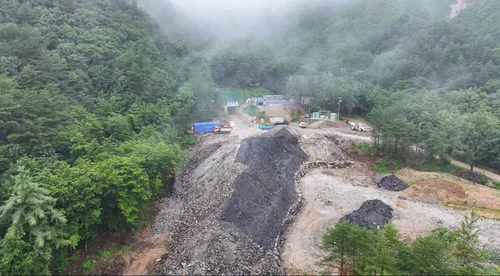
Pure Tungsten Inc. is a private tungsten mining company focused on supply from outside the DFARS covered countries. It is restarting the Ssangjon mine in South Korea, which has a fully built mill, with production targeted for Q4 2026 at 1,000 tonnes a year. It is also advancing Maykhura in Tajikistan in joint venture with TALCO, a past-producing mine with about 2 million tonnes at 0.93% WO₃ plus about 900,000 tonnes of tailings at about 0.4% WO₃, and a JORC report expected in Q1 2027. The company targets 4,000 tonnes a year by 2028.
Pure Tungsten is raising C$10 million at C$0.80 per share (minimum C$5,000, about C$240 million pre-raise valuation) ahead of a planned IPO or reverse takeover in London or New York in H2 2027. As with any pre-IPO investment, the shares are illiquid until a listing, the listing may be delayed, and restart projects can face ramp-up, metallurgy and funding challenges. Read about Pure Tungsten's stock and IPO plans, or request the Pure Tungsten investor pack.
Five questions to ask before you invest in tungsten
- What am I actually exposed to? The metal price, one company's execution, or a broad critical-minerals basket?
- Does the investment still work at lower prices? Check a company's economics at prices well below today's European level.
- Where is the tungsten mined and refined? Origin decides whether it qualifies for US defence supply chains from 2027.
- How is it funded? A company that is fully funded to production carries less dilution risk.
- How easily can I sell? Liquidity ranges from daily trading (large listed stocks and ETFs) to none at all (pre-IPO shares and physical bars).
This article is general information, not investment advice. Tungsten investments can lose value, and you should consider your own circumstances or speak to a licensed adviser before investing.