
What is a pre-IPO investment?
A pre-IPO investment is a purchase of shares in a private company before those shares trade on a public stock exchange. The buyer pays the company, or an existing holder, in a private deal. The initial public offering (IPO) is a later step, when the company sells shares to the public under a prospectus.
"Pre-IPO stocks" covers three deals. In a direct placement the company issues new shares. In a secondary purchase an existing holder sells shares, often through a platform. In a fund or special purpose vehicle (SPV) a manager pools cheques and the investor does not hold the company shares. Price, fees and the right to sell differ in each case.
The IPO itself is the later, registered sale to the public. A brokerage account is enough once trading starts. Before that, the offering is private and is not registered with the US Securities and Exchange Commission (SEC). The SEC's investor alert says many pre-IPO offers aimed at the general public may be illegal, and some are scams in which the seller does not own the shares.
How do you invest in pre-IPO companies?
You invest in a pre-IPO company by buying in a private placement, from an existing shareholder, or through a fund. A normal brokerage account does not include private shares. A news line about a famous company "coming to" a broker is not a general right to buy. If a broker does offer access, that access is a separate private offering, with its own minimum, fees and eligibility test.
| Route | Who you buy from | Who can usually buy | The catch |
|---|---|---|---|
| Direct placement | The company, which issues new shares | Investors who meet the exemption in their country | No public market until a listing, and the listing can slip |
| Secondary platform | An existing holder, through a marketplace | Accredited investors, mostly in late-stage technology | Markups and fees; mining companies are rarely on these platforms |
| Fund or SPV | A manager who holds the shares for the group | Investors who meet the fund's own rules | Extra fees, and you do not hold the company shares yourself |
| Wait for the IPO | The public market, through a broker | Anyone with a brokerage account on that exchange | You pay the public price, which can be higher or lower than the last private round |
Platforms such as EquityZen, Forge, Hiive and StartEngine are built mainly for late-stage technology names. They are a weak way to find a tungsten mine. A mining pre-IPO investment is almost always a direct placement, and the document that matters is the offering memorandum.
In the United States, these placements commonly rely on Regulation D. Under Rule 506(b), the company cannot advertise the offer to the public. Under Rule 506(c), it can advertise, but every buyer must be an accredited investor and the company must take reasonable steps to verify that. Both rules are exemptions from SEC registration. They are not a quality mark.
Can you buy pre-IPO shares?
You can buy pre-IPO shares when you meet the legal test for that offering. In the United States, that test is usually accredited-investor status under Rule 501. The SEC tells investors to be wary of an unregistered offer that sets no income or net-worth bar. A missing test is a common feature of pre-IPO scams, not a sign the deal is open to everyone.
An individual can qualify as an accredited investor in the US in any one of these ways, at the time of the sale:
| Test | What the SEC requires |
|---|---|
| Income | Over US$200,000 in each of the last two years, or over US$300,000 with a spouse or spousal equivalent, and a reasonable expectation of the same this year |
| Net worth | Over US$1 million, alone or with a spouse or spousal equivalent, excluding the primary residence |
| Licence | A Series 7, Series 65 or Series 82 licence, held in good standing |
A director or executive officer qualifies only for that company's own offering. The primary home is excluded from net worth. A mortgage on it counts as a debt only to the extent it exceeds the home's value. Other countries set their own tests, and the offering documents decide.
Canada. National Instrument 45-106, as amended to 19 September 2025, treats an individual as an accredited investor if any one of these is true:
- Financial assets over C$1 million, alone or with a spouse, before tax and after related debts. Financial assets mean cash, securities, and certain insurance or deposit contracts. A house does not count.
- Net income before tax over C$200,000 in each of the two most recent calendar years, or over C$300,000 with a spouse, with a reasonable expectation of exceeding that level this year.
- Net assets of at least C$5 million, alone or with a spouse.
United Kingdom. A promotion of unlisted shares often relies on the high-net-worth exemption in the Financial Promotion Order. Since 27 March 2024 the statement asks for income of at least £100,000 in the last financial year, or net assets of at least £250,000 excluding the primary residence, loans secured on it, and pensions. It must have been signed in the past 12 months. Higher thresholds applied for a few weeks in early 2024 and were then reversed. Signing the statement lets a promoter speak to you. It says nothing about whether the investment fits.
What is the 7% rule in investing?
The 7% figure attached to IPOs is usually the underwriters' fee, not a rule for people buying private shares. On many US IPOs the banks buy shares from the company at a discount, the gross spread, and sell them to the public at the offer price. Broker disclosures describe that spread as about 7% on many deals. It is negotiated, and on large offerings it is often lower. It does not set the price of a pre-IPO round.
A second 7% rule is a trading habit associated with William O'Neil: sell a listed stock that falls about 7% below the purchase price. It assumes a market price and a broker who can sell the same day. A pre-IPO share has neither until the company lists.
How long after an IPO should you buy a stock?
Buyers in the public market can purchase on the first day of trading. Holders of pre-IPO shares usually cannot sell that day. Two limits sit on top of each other.
The first is contractual. IPO underwriting agreements commonly stop existing shareholders and employees selling for about 180 days. The number of days is whatever that agreement says. No statute fixes it at 180.
The second is US Rule 144, the SEC safe harbour for reselling restricted securities. Private-placement shares are restricted. The holder must have held them for at least six months if the company already reports under the Exchange Act, and at least one year if it does not. The clock starts when the shares were fully paid for. Directors and other affiliates face extra volume limits after that.
There is no required wait for a buyer. Some investors wait until the lock-up ends because more shares can then reach the market. The price can rise or fall. Waiting is a judgement about supply, not a rule that protects the buyer.
Is a pre-IPO investment worth it?
A pre-IPO investment can suit someone who can lose the entire amount and who does not need the money back on a date. It is a poor fit for anyone who wants a prospectus, a daily price, or a way out.
The SEC states the risks directly. The company may never succeed, the shares may never rise, the company may never go public, and there may be no market in which to sell. Promoters sometimes add an undisclosed markup, a claimed discount to a hoped-for IPO price, or shares they do not own. Check the seller on Investor.gov and FINRA BrokerCheck before sending money. A platform list is an inventory of what holders want to sell, not a ranking of which pre-IPO is best.
A mine adds risks a software company does not: a falling metal price, refused permits, a late or over-budget build, and new shares issued to finish the plant. A listing date in a presentation is a target. Abenójar Tungsten joined the London market on 30 October 2026 and traded below its 110p offer price that first morning. Buying before the IPO does not guarantee a higher public price later.
For a wider view of listed routes, including producers, developers and funds, see how to invest in tungsten and is tungsten a good investment?.
How is a mining pre-IPO investment different?
A mining pre-IPO investment is underwritten by rocks, a plant and a commodity price. A technology pre-IPO is underwritten by revenue growth and a hoped-for listing multiple. The paperwork looks similar. The questions that decide whether the price is sensible do not.
| Question | Late-stage technology | Mining pre-IPO |
|---|---|---|
| What are you paying for? | Growth in sales, and a listing at a higher multiple | Ore, a processing plant, permits and a saleable product |
| How is the claim checked? | Private revenue figures, often unaudited | A mineral resource under a code such as JORC or NI 43-101 |
| Can you buy from another holder? | Often, on a secondary platform | Rarely. You buy from the company, or you do not buy |
| What else can go wrong? | Growth misses, a "down round" at a lower price | Grade, metallurgy, permits, capital cost, customers, the metal price |
| When does cash arrive? | The company may already sell a product | A new mine can be years from first concentrate. A restart of a past producer can be closer |
JORC is the Australasian code for reporting mineral resources and ore reserves. NI 43-101 is the Canadian equivalent. A tonne figure with no code, no date and no competent person is a story, not a resource. Grade is quoted as percent WO₃ (tungsten trioxide): a higher grade usually means less rock moved per tonne of metal. JORC versus NI 43-101 and what WO₃ means cover the units. The work on a mining pre-IPO is reading the technical report, the use of proceeds and the subscription agreement.
What should you check before sending money?
Use this list on any pre-IPO investment, and the last three items on any mine. The offering documents should answer each one. If they do not, that is the finding.
- Your status. Which exemption applies, and do you meet it? A seller who says everyone qualifies matches the pattern the SEC warns about.
- Who owns the shares. In a placement the company issues new shares. In a secondary sale, confirm the seller holds them.
- Use of proceeds. How much builds the project, repays debt, or pays fees?
- Share count. How many shares exist, how many this round creates, and how many options and warrants sit on top? Your percentage is the share count, not the size of the cheque.
- Price against the last round. An up round is a higher price than last time. A down round is a lower one. Compare either with the stated pre-money value and with what the money will build.
- The path to a listing. IPO or reverse takeover (RTO), which exchange, what window, and what must happen first? An RTO merges the private company into a shell that is already listed. IPO versus RTO compares the two.
- The lock-up. What the subscription agreement says about transfers, and what lock-up the underwriters will demand.
- Stage and jurisdiction. Past producer with a mill, a project in construction, or a drill target? Can the product be sold to US defence buyers after the 2027 tungsten origin rule?
- Resource and customers. A current JORC or NI 43-101 report, and a binding offtake rather than expressions of interest.
- Money still to spend. A round that funds a study does not fund a mine. Ask what remains between this cheque and first production.
What does a small pre-IPO cheque actually buy?
At Pure Tungsten's published terms, C$5,000 at C$0.80 a share buys 6,250 shares. That is arithmetic, not a forecast of what those shares will be worth.
Pure Tungsten Inc. is a private Canadian company raising C$10 million at C$0.80 per share, with a minimum of C$5,000 and a stated pre-raise market capitalisation of about C$240 million. It is in discussions for an IPO or an RTO in London or New York, targeted for the second half of 2027. The full terms are on the Pure Tungsten pre-IPO investment overview.
Three figures follow from those published terms, and only from them:
| Illustration | Calculation | What it means |
|---|---|---|
| Shares for the minimum | C$5,000 ÷ C$0.80 = 6,250 shares | You would hold 6,250 shares, not a tradeable position |
| Share of the cash raised | C$5,000 ÷ C$10 million = 0.05% | You would have supplied 0.05% of this round, which is not 0.05% of the company |
| Illustrated post-money slice | About C$240 million + C$10 million = about C$250 million. C$5,000 ÷ C$250 million ≈ 0.002% | If the stated pre-raise value is the equity value and this round is new equity, a minimum cheque is about 0.002% of the post-raise value. Options, warrants and the exact share register can change that |
The new money as a group would be C$10 million of about C$250 million, or about 4% of that illustrated post-raise value. Exact ownership is in the offering documents. The table is a way to stop a round size being mistaken for a personal stake.
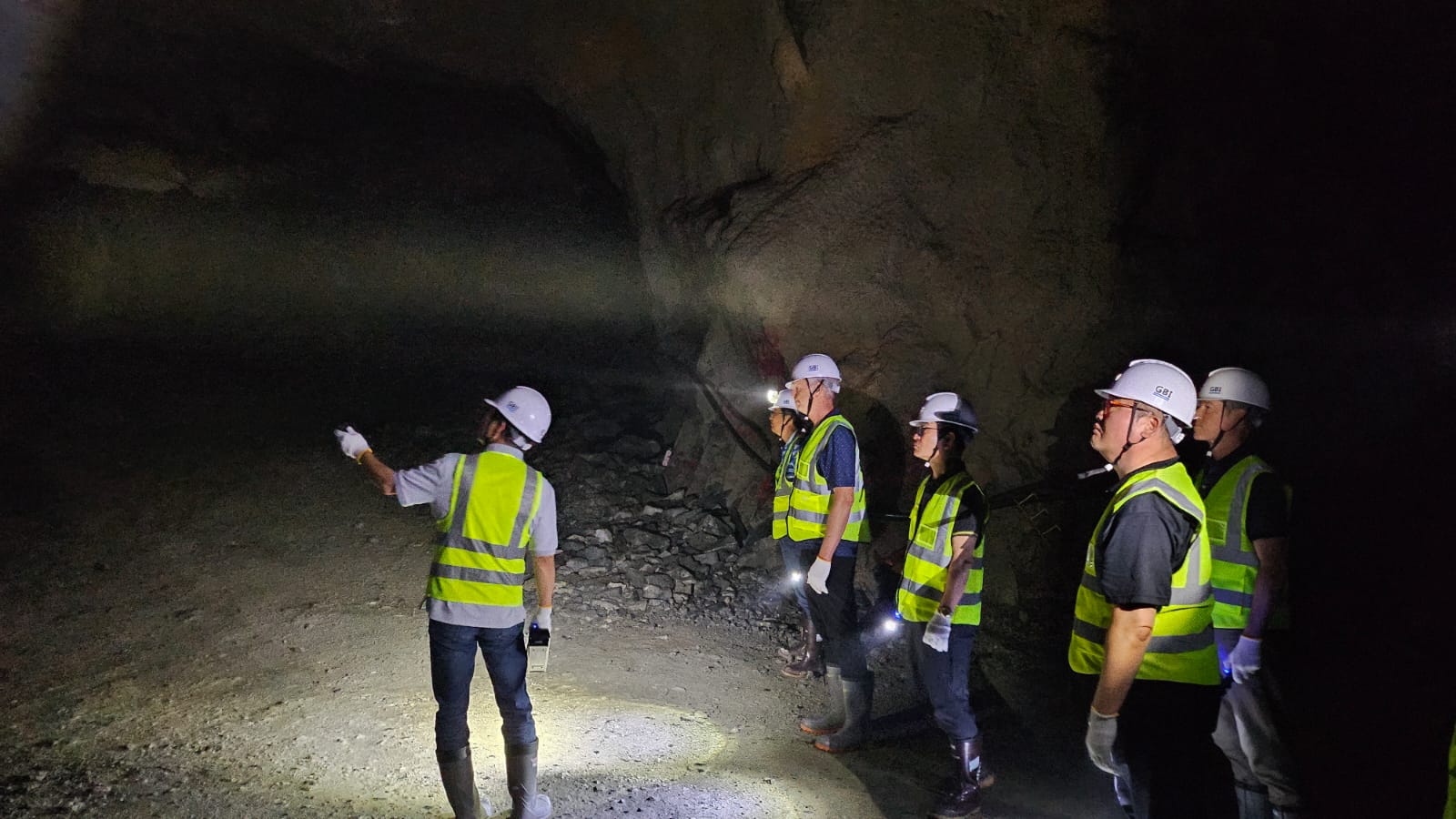
The Ssangjon mine and mill in South Korea are fully funded, with production targeted for the fourth quarter of 2026 at an initial 1,000 tonnes a year. Maykhura, in Tajikistan, is a past producer of about 2 million tonnes at 0.93% WO₃, plus about 900,000 tonnes of tailings at about 0.4% WO₃, in a joint venture with TALCO. The combined target is 4,000 tonnes a year by 2028. Those dates can move, and the shares stay illiquid until a market exists. The Pure Tungsten stock and IPO note sets out the risks. The C$0.80 figure is a placement price, not a public quote.
Eligible investors can request the Pure Tungsten investor pack and check the current documents against the ten-point list above. If the pack does not answer a point, that is the point to stop on.