
Is tungsten worth more than gold?
No. Gold is worth roughly 370 times more than tungsten by weight at Western prices, and about 1,200 times more at Chinese prices. On 17 November 2026, gold closed at about US$3,850 per troy ounce (about US$124 per gram), while the tungsten contained in European APT was worth about US$337 per kg (about US$0.34 per gram).
Tungsten is not traded as bullion. Its benchmark is ammonium paratungstate (APT), an intermediate product priced in US dollars per metric ton unit (mtu), which is 10 kg of tungsten trioxide containing 7.93 kg of tungsten. Our tungsten price guide explains the conversion in full.
| Price basis | Gold (17 Nov 2026) | Tungsten, European APT | Tungsten, Chinese APT |
|---|---|---|---|
| Per gram | ~US$124 | ~US$0.34 | ~US$0.10 |
| Per troy ounce (31.1 g) | ~US$3,850 | ~US$10.50 | ~US$3.20 |
| Per kg | ~US$123,800 | ~US$337 | ~US$103 |
| Gold-to-tungsten ratio | — | ~370 : 1 | ~1,200 : 1 |
Sources: GoldPrice.com (gold close, 17 Nov 2026); tungsten contained in APT at about US$2,675 per mtu (Europe) and US$820 per mtu (China), late October 2026, from our tungsten price guide. Finished tungsten products sell for more than contained-metal value.
Tungsten vs gold: the key differences
| Gold | Tungsten | |
|---|---|---|
| Density | 19.32 g/cm³ | 19.25 g/cm³ |
| Melting point | 1,064 °C | 3,422 °C, the highest of any metal |
| Hardness | Soft, easily scratched | Very hard; tungsten carbide is close to diamond |
| Main uses | Jewellery, investment, central bank reserves, electronics | Cemented carbide cutting tools, defence, semiconductors, electronics |
| Annual mine supply | About 3,900 t (four quarters to Sept 2026, WGC) | About 85,000 t (2025, USGS) |
| Supply concentration | Mined on every continent except Antarctica | About 79% mined in China |
| How it trades | Spot and futures markets, bullion, ETFs | Negotiated contracts priced off APT assessments |
| On the US critical minerals list? | No | Yes |
The table shows why the two metals behave so differently. Gold is scarce, chemically inert and easy to store, so it works as money. Tungsten is around 22 times more plentiful in annual mine output, but it is hard to replace in industry, which makes it strategically important rather than a store of value. See what tungsten is used for.
Why tungsten is used to fake gold bars
Tungsten is the only affordable metal with almost exactly the same density as gold. Gold is 19.32 g/cm³ and tungsten 19.25 g/cm³, a difference of about 0.36%. Lead (11.3 g/cm³) and steel (about 7.9 g/cm³) are far too light, while platinum, which is denser than gold, is too expensive to use as a filler.
A worked example: a genuine 1 kg gold bar has a volume of about 51.8 cm³. The same volume of tungsten weighs about 996 g, only around 4 g less. If a bar were 75% tungsten by weight under a gold shell, as one 2012 New York bar was reported to be, it would contain about 250 g of gold, worth about US$31,000 at November 2026 prices, while being sold as a bar worth about US$124,000. The tungsten inside would be worth well under US$300.
Documented cases of tungsten-filled gold bars
| Year | Where | What was found |
|---|---|---|
| 2009 | Hong Kong | Bankers reported gold-plated tungsten bars, according to trade press at the time |
| 2012 | United Kingdom | A 1 kg bar drilled out and filled with tungsten, found after a weight discrepancy |
| 2012 | New York, 47th Street | 10 oz bars stamped as PAMP Suisse, with serial numbers and certificates, reported to be more than 75% tungsten; federal agents investigated |
Sources: Business Insider, New York Post and Manhattan Gold & Silver (2012); China Tungsten Online (UK case). The 2009 Hong Kong reports were never independently confirmed in detail.
The New York bars passed the checks most dealers relied on: the gold surface passed scratch tests, tungsten is non-magnetic, the weight was right, and X-ray fluorescence (XRF) only reads the surface layer. The fakes were found when a dealer drilled into one after a tip-off.
How to test a gold bar for tungsten
No single test is enough. Counterfeiters design fakes to pass one property at a time, so combine methods that measure unrelated properties:
- Check provenance first. Buy from accredited refiners and established dealers, and keep bars in a verified chain of custody. A deep discount from an unknown seller is a warning sign; it was in the New York case.
- Weigh and measure. Compare the weight and exact dimensions with the manufacturer's specification. This catches lighter fillers, but not a well-made tungsten core.
- Test resistivity. Tungsten conducts electricity very differently from gold. Devices such as the Sigma Metalytics PMV read beneath the surface; its bullion wand detects tungsten up to about 1.5 mm under pure gold, and deeper sensors are available for thicker bars.
- Use ultrasound. Sound travels at different speeds through gold and tungsten, so ultrasonic testing can reveal an internal core or seam that surface tests miss.
- Assay if in doubt. Drilling, fire assay or melting by a refiner is conclusive, though it damages the bar.
Coins are less exposed. Most bullion coins are thinner, which makes cores easier to detect, and 22-carat coins such as the Krugerrand are less dense than tungsten, so a tungsten filling would change their weight or size.
Tungsten vs gold as an investment
The two metals give investors very different exposures.
| Gold | Tungsten | |
|---|---|---|
| Price in 2025 | Up about 64%, its best year since 1979 (Reuters) | European APT roughly doubled, from about US$331 to US$675 per mtu (USGS) |
| Price in 2026 | Record close of about US$5,405 on 29 Jan; about US$3,850 on 17 Nov, down about 12% for the year | European APT about US$2,500–3,100 per mtu in late October; Chinese APT down about 69% from its March peak by mid-October |
| Main price drivers | Interest rates, the US dollar, central bank buying, ETF flows | Chinese export controls and quotas, carbide demand, defence sourcing rules |
| Who buys | Central banks (675 t in the first nine months of 2026, WGC), ETFs, jewellers, individuals | Carbide, tooling, defence and electronics manufacturers |
| Can individuals hold the metal? | Yes: bars, coins, vaulted bullion | Only in a limited way: specialist dealers sell bars and coins, but there is no bullion benchmark and resale is difficult |
| ETFs | Many large physically backed funds | No pure-play fund (tungsten ETF guide) |
| Main way to invest | Bullion, ETFs, gold mining shares | Tungsten mining shares and private companies |
Gold is a deep, liquid market. Total demand reached 3,881 tonnes in the first nine months of 2026, worth a record US$566 billion, according to the World Gold Council (WGC). Its role is to preserve wealth and diversify a portfolio, and it can be bought and sold within seconds.
Tungsten is a small, opaque market. At late-2026 prices, the world's annual mine supply is worth roughly US$9–29 billion depending on whether Chinese or European prices apply (our estimate from USGS volumes). Its investment case rests on supply security: China dominates production and restricts exports, and from 1 January 2027 US defence contracts must exclude tungsten mined or processed in China, Russia, North Korea or Iran (the DFARS tungsten rule explained).
That makes tungsten a higher-risk, company-specific bet. You are not buying the metal; you are backing a miner's ability to produce it. Shares can fall even when tungsten prices are high, as many did in 2026. Weigh the bull and bear case in is tungsten a good investment?, and compare listed names in our tungsten stocks guide.
What about tungsten vs gold rings?
Most "tungsten" rings are tungsten carbide, a ceramic-like compound of tungsten and carbon. Tungsten carbide rings are far harder and more scratch-resistant than gold and typically cost much less, but they cannot easily be resized and can crack under a hard impact. Gold rings can be resized and keep intrinsic value, because the gold can be sold or recycled. A tungsten carbide ring contains only a few dollars' worth of tungsten.
How investors get tungsten exposure
Physical tungsten bars and coins exist, but dealer spreads are wide and resale is difficult, so most investors use other routes:
- Listed producers and developers such as Almonty Industries, Kazakhstan's Jiaxin International and EQ Resources. See our Almonty stock profile.
- Broad critical minerals funds, which hold only a small amount of tungsten. See critical minerals stocks.
- Private and pre-IPO companies, which can offer earlier entry at higher risk. See how to invest in tungsten.
Where Pure Tungsten fits
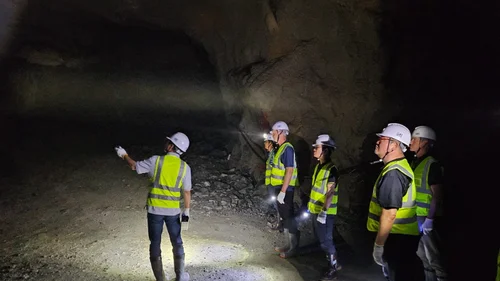
Pure Tungsten Inc. is a private tungsten mining company focused on supply from outside the DFARS covered countries. It is restarting the Ssangjon mine in South Korea, which has a fully built mill, with production targeted for Q4 2026 at 1,000 tonnes a year. It is also advancing Maykhura in Tajikistan in joint venture with TALCO: about 2 million tonnes at 0.93% WO₃ plus about 900,000 tonnes of tailings at about 0.4% WO₃, with a JORC (Joint Ore Reserves Committee) report expected in Q1 2027. The company targets 4,000 tonnes a year by 2028.
Pure Tungsten is raising C$10 million at C$0.80 per share (minimum C$5,000, about C$240 million pre-raise valuation) ahead of a planned IPO or reverse takeover in London or New York in H2 2027. Unlike gold bullion, pre-IPO shares are illiquid and high risk: a listing can be delayed, and restart projects can face ramp-up, metallurgy and funding challenges. Read about Pure Tungsten's IPO plans, or request the Pure Tungsten investor pack.
This article is general information, not investment advice. Gold and tungsten prices change daily; check live prices and consider your own circumstances or speak to a licensed adviser before investing.